
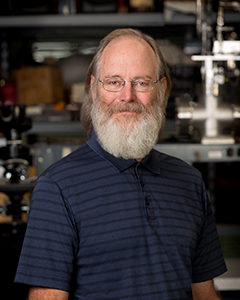
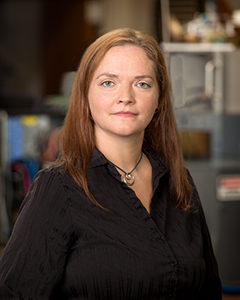
Scott Little and Daughter Marissa Little.
Photos likely taken in about the same timeframe of their LENR experiments. Source: https://earthtech.org/pubs/
Citation and Download for EarthTech LRDI Report:
Shown below is a summary of Scott and Marissa Little’s LRDI report as prepared by ChatGPT.
Executive Summary
This report summarizes the LENR Research Documentation Initiative (LRDI) documentation project for Scott and Marissa Little. It presents an overview of their research activities, scientific collaborations, documentary archive, and contributions to the advancement and preservation of Low Energy Nuclear Reactions (LENR).
Research Career
Scott Little’s work in LENR emphasized experimental research, technology development, laboratory operations, and collaboration with other investigators. Working alongside Marissa Little, he participated in experimental programs while helping preserve research records and technical documentation. Their activities included work at EarthTech International and later efforts supporting continued LENR investigations and archival preservation.
Research Locations
The report documents research conducted primarily at EarthTech International in Austin, Texas together with later laboratory facilities associated with the Littles’ work. It also describes participation in conferences, collaborative meetings, and interactions with researchers from other LENR organizations.
Principal Collaborators
The report describes collaborations with researchers associated with EarthTech International as well as members of the wider international LENR community. These collaborations supported experimental investigations, laboratory development, scientific communication, and documentation activities.
Publications, Presentations, and Reports
The LRDI report documents scientific papers, conference presentations, technical reports, laboratory documentation, internal reports, and related publications produced during the Littles’ research activities. Together these materials illustrate the development of their scientific work.
Interviews
Recorded interviews form an important component of the LRDI archive. They preserve first-hand recollections of laboratory activities, experimental methods, collaborations, and the historical development of the research program, providing context that complements the written record.
Materials in the LRDI Archive
The archive includes published and unpublished reports, electronic research files, laboratory notebooks where available, correspondence, photographs, presentation materials, recorded interviews, bibliographic resources, and additional historical documentation assembled through the LRDI.
Historical Significance
The Scott and Marissa Little archive preserves an important record of research associated with EarthTech International and related LENR activities. By combining documentary records with oral-history interviews, it contributes to preserving the history of modern LENR research for future investigators and historians.
==========
“Mother of All Calorimeters”
A principal contribution of EarthTech and Scott Little to the LENR field was design and construction of a highly accurate calorimeter. He did so in order to address what he felt were many errors in heat measurement in the LENR field. His caloimeter is decribed below in a conference presentation. .
“Calorimetry is conceptually simple but considerable effort is required to reduce systematic errors to acceptable levels. Since 1989, we have designed and constructed a dozen calorimeter systems for cold fusion research. Each of these systems provided valuable experience in error detection and correction. The culmination of our efforts, an instrument with a design accuracy of 0.1% relative, is nicknamed MOAC (Mother Of All Calorimeters).” Source: Little, S., G. Luce, and M. Little, 2008. MOAC – A High Accuracy Calorimeter for Cold Fusion Studies. in ICCF-14 International Conference on Condensed Matter Nuclear Science. Washington, DC.
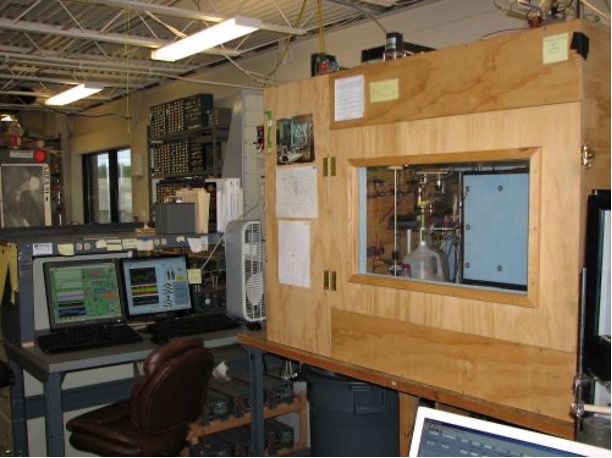
MOAC, “Mother of All Calorimeters”

Scott Little at His Home in Dale, TX, January 2021

EarthTech Logo